Better ways to measure your blood pressure at home
Keeping tabs on your blood pressure helps you take control of your heart health. Here’s how to get a good reading between doctor’s appointments.
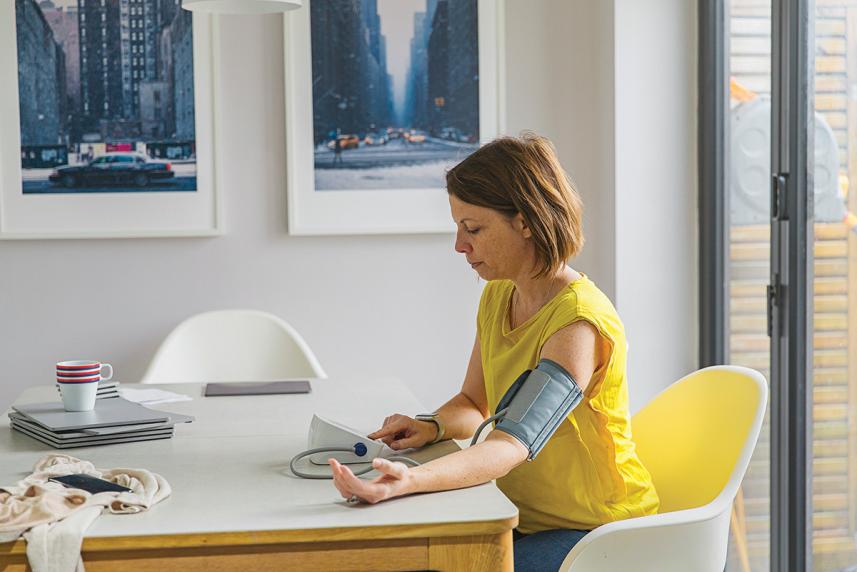
Do you have high blood pressure? Checking your numbers at home is an important way to manage this condition (also called hypertension). Regular monitoring can let you know if medication and lifestyle changes are working.
Or, maybe your numbers start to creep up. That can signal that it’s time to ask your doctor about adjusting your medication to bring your numbers back down. Best of all, measuring your blood pressure is fast and easy to do on your own.
Having the right equipment is key. So is knowing some simple tricks to get an accurate reading. Here’s what to do.
Choose the right at-home blood pressure monitor
There’s no need to spend a lot. You want to buy a machine that gives accurate readings. Follow these recommendations from the American Heart Association (AHA):
- Choose a monitor that has been validated by medical professionals during a review process.
- Pick an automatic, cuff-style monitor for the upper arm.
- Be sure the cuff fits your arm. A standard cuff size may be too large or too small for some people.
Some newer models can wirelessly connect to a smartphone app and keep a record of all your readings. Some also provide charts, making it easy to spot positive and negative trends.
Devices that fit onto the wrist are not always accurate, says Martha Gulati, MD, division chief of cardiology at the University of Arizona College of Medicine. Blood pressure readings tend to be higher when taken with wrist monitors. The AHA does not recommend them.

Find more health info you can trust
The Wellframe app resource library makes it easy to get your health questions answered. Download it now and use access code excwsqcare.
Follow these important prep tips
Blood pressure varies throughout the day. In addition, it can spike because of something you ate or because of sudden stress. Here’s how to plan for the most accurate reading possible, according to Dr. Gulati:
- Take it at the same time every day. This helps reveal your blood pressure patterns. Common times are about half an hour after waking up in the morning and again sometime during the evening.
- Don’t eat or drink beforehand. Avoid food, caffeine, tobacco, alcohol, and black licorice for at least 30 minutes before doing the measurements. These foods and beverages can cause your blood pressure to spike.
- Go to the bathroom first. A full bladder can raise blood pressure slightly, throwing off the reading.
- Relax for 5 minutes before you take your blood pressure. Activity can temporarily raise blood pressure.
Take your blood pressure like a pro
The AHA recommends these steps for taking your blood pressure:
- Sit up straight in a chair that has back support. Place both feet on the floor. Rest your arm on a table so that your upper arm is on the same level as your heart.
- Wrap the cuff around your bare upper arm. Do not put it over clothing.
- Begin taking your blood pressure. Don’t move or talk, which can skew your results.
- Take at least two readings, each about 1 minute apart.
- Write down the results with the time and date.
Understand your numbers
Your blood pressure is composed of two numbers:
- Systolic (top number): The pressure in your arteries when your heart beats
- Diastolic (bottom number): The pressure in your arteries when your heart rests between beats
Here’s what the numbers mean, according to the AHA. Your doctor may recommend lifestyle changes or medication to help control your blood pressure.
Normal:
Systolic: less than 120
Diastolic: less than 80
Elevated:
Systolic: from 120 to 129
Diastolic: less than 80
High stage 1:
Systolic: from 130 to 139
Diastolic: from 80 to 89
High stage 2:
Systolic: at least 140
Diastolic: at least 90
Remember that your blood pressure changes throughout the day, so you may notice small variations. What you’re looking for during at-home readings is whether you start trending higher. Tell your doctor if this happens.
Try these lifestyle tips to help lower your blood pressure
If your blood pressure is skewing a bit higher than you’d like, these science-backed ways can help bring it down:
- Exercise regularly. Aim for about 150 minutes per week (that’s about 30 minutes per day, 5 times per week).
- Eat a healthy diet. Include plenty of fruits, vegetables, and whole grains.
- Reduce sodium. Even a modest reduction in sodium can lower blood pressure.
- Limit alcohol. More than one drink per day can raise blood pressure.
- Quit using tobacco products. Smoking cigarettes and using other tobacco products with nicotine increases blood pressure.
- Reduce stress. Try deep breathing exercises, yoga, or just relaxing outdoors.
- Focus on sleep quality. Create good bedtime habits, like limiting screen time and going to bed at the same time every night. This can help keep your blood pressure more regulated.
Sometimes these habits can be enough to get you back into a normal range. They’re also just good habits that boost your overall health.
Continue taking your blood pressure daily while trying these changes. If you’re still getting slightly higher readings, check in with your doctor.
But if your blood pressure is spiking much higher, get help sooner. Call 911 if you also have:
- Chest pain
- Shortness of breath
- Changes in vision
- Back pain
- Numbness or weakness
- Difficulty speaking
What’s the bottom line?
Staying on track with your blood pressure is important for your health. Remember, high blood pressure has no symptoms, so it can be easy to miss. But with home monitoring, you can catch small changes, then take action with your doctor.
Article sources:
Blood pressure monitoring overview: American Heart Association; Centers for Disease Control and Prevention; National Heart, Lung, and Blood Institute
Daily blood pressure patterns: Mayo Clinic
Tips to control blood pressure: Mayo Clinic
Blood pressure emergencies: American Heart Association